
Fatehpur Sikri Tours
Are you hoping to visit the Buland Darwaza and experience exploring stunning Mughal Architecture in Fatehpur Sikri?
Arivo Holidays brings you the ultimate itinerary allowing you to explore the Buland Darwaza and truly enjoy exploring stunning Mughal Architecture. This experience is uniquely planned for you.
Browse through our hand-picked tour list below and secure your booking! 👇
5 Days - Delhi Agra Jaipur Golden Triangle Tour by Road
8 Days - Golden Triangle with Rishikesh Yoga Tour
10 Days - Golden Triangle with Kashmir: Forts, Palaces & Valleys

5 Days - Delhi Agra Jaipur Golden Triangle Tour by Train.
9 Days - Mumbai with Golden Triangle Tour
Everything About Fatehpur Sikri Tours
Top Attractions
Weather & Best Time
Fatehpur Sikri: The Mughal Capital That Time Forgot
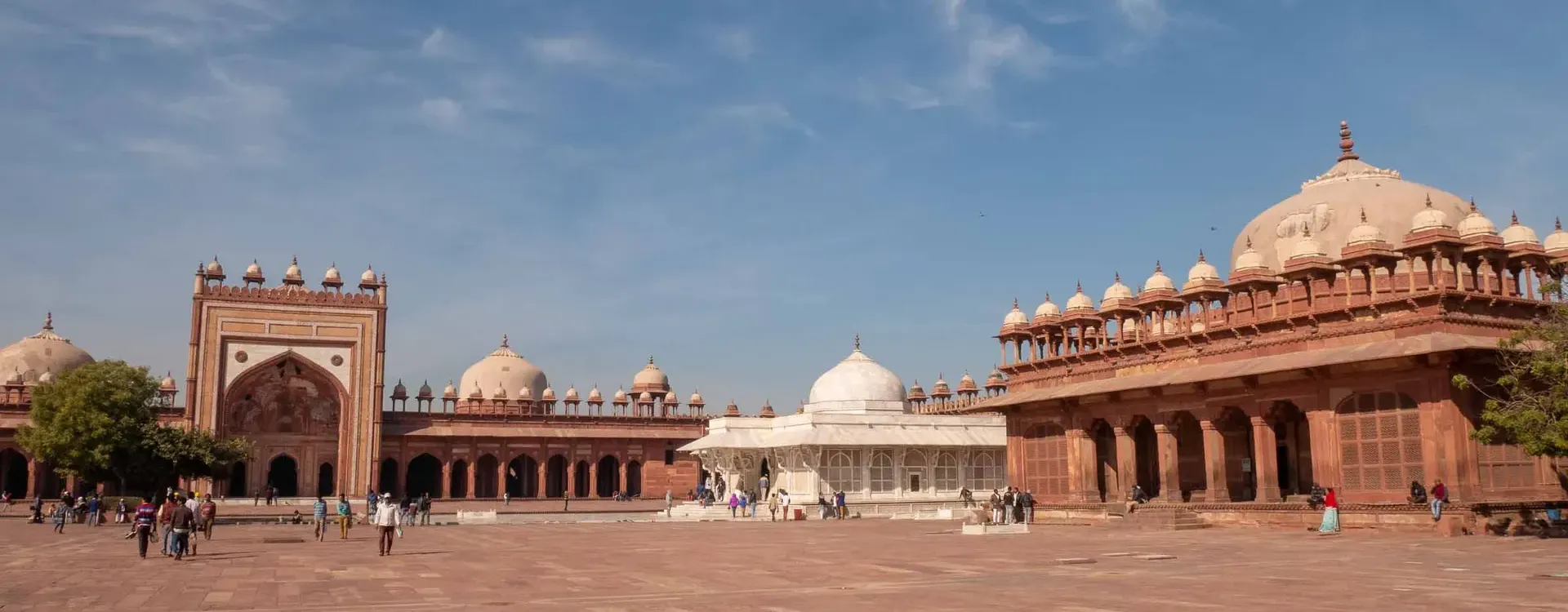
About 40 km from Agra, Fatehpur Sikri stands as one of history's most striking what-ifs — a magnificent Mughal capital built by Emperor Akbar in the 1570s, only to be abandoned within 15 years, largely due to water scarcity. What's left today is a near-perfectly preserved red sandstone city, frozen at the peak of Mughal architectural ambition, making it one of the most complete surviving examples of a 16th-century royal complex anywhere in India.
Things You Really Shouldn't Skip
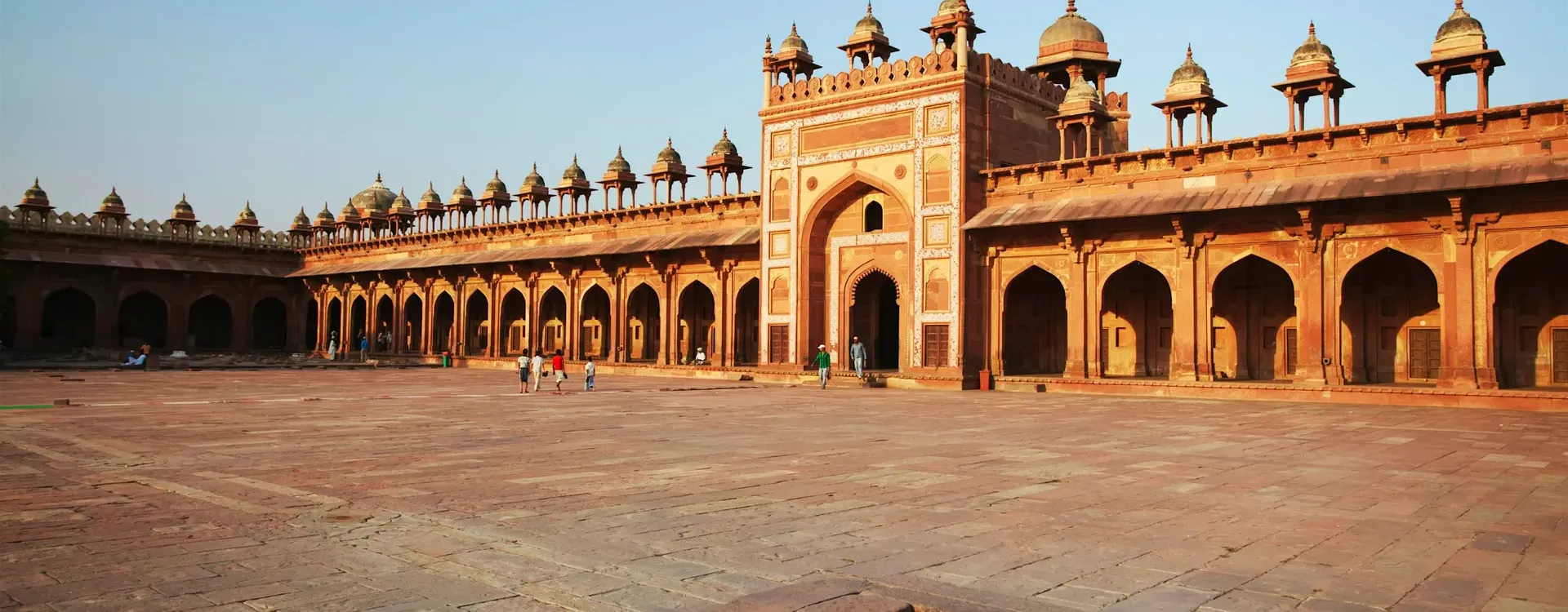
Buland Darwaza — The towering entrance gate to the Jama Masjid complex, standing over 54 metres tall and built by Akbar to commemorate his victory in Gujarat. It remains one of the largest gateways in the world, and climbing the steps up to it is genuinely one of the most dramatic architectural approaches in India.
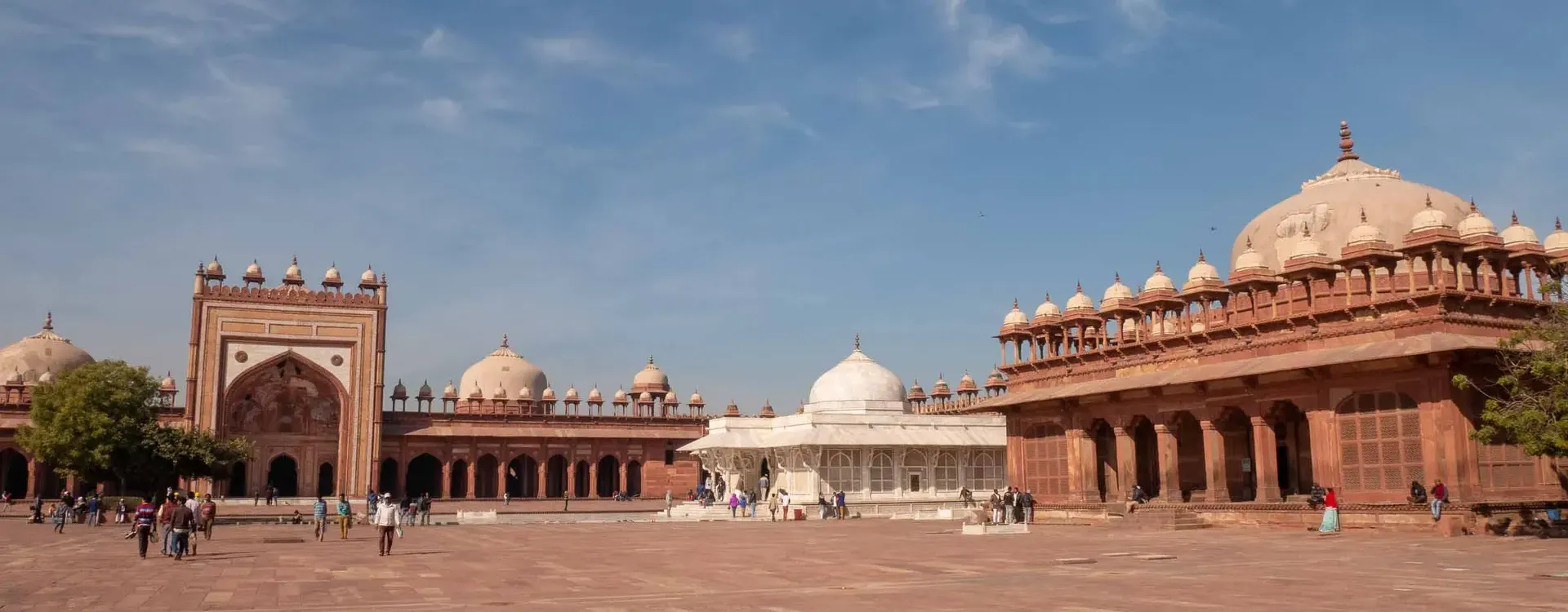
Jama Masjid and Tomb of Salim Chishti — This mosque complex houses the exquisite white marble tomb of the Sufi saint Salim Chishti, whose blessing Akbar credited for the birth of his son Jahangir. The tomb's intricate lattice screens (jaalis) and mother-of-pearl inlay work draw pilgrims and history lovers alike, and it's customary to tie a thread on the marble screens for a wish.
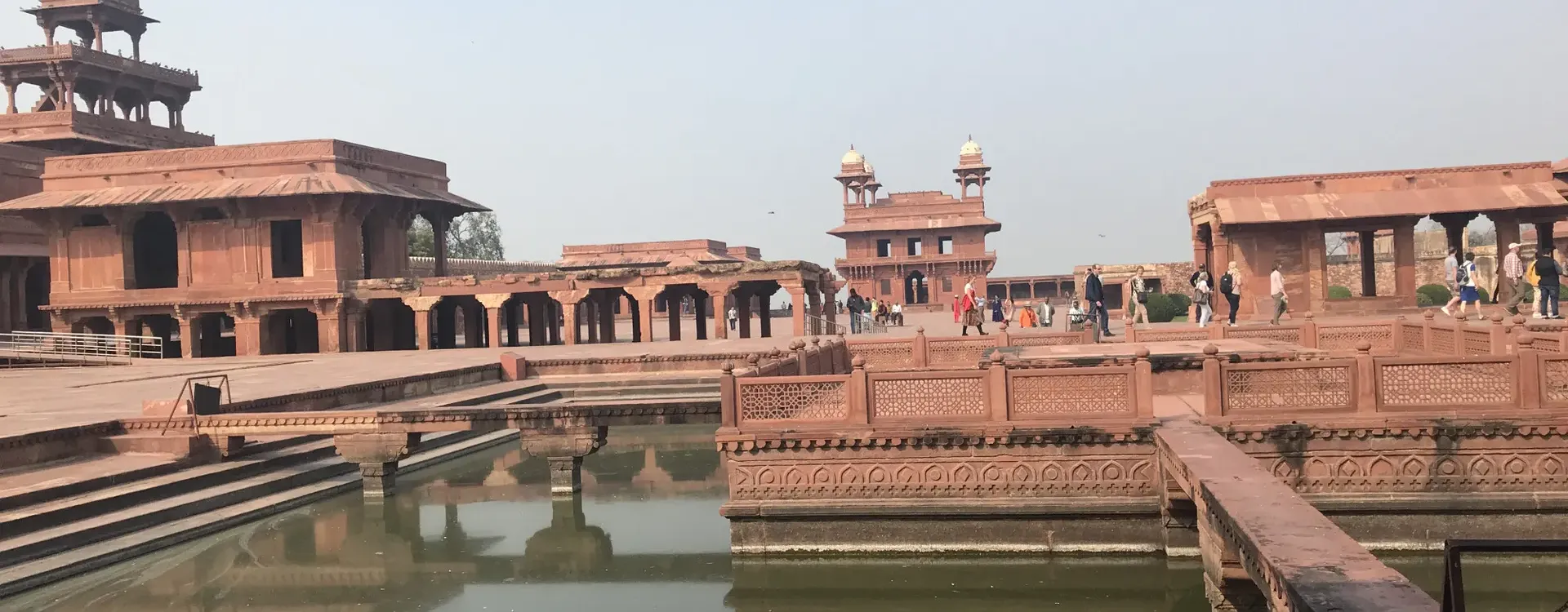
Panch Mahal — A striking five-storey pillared pavilion, each floor progressively smaller than the one below, believed to have been used by the royal ladies for leisure and to catch the breeze. The asymmetric layout of columns makes it one of the more architecturally unusual structures in the complex.
Jodha Bai's Palace — The largest palace in the complex, believed to have housed Akbar's Rajput queen, blending Hindu and Islamic architectural elements — a genuine reflection of Akbar's syncretic approach to religion and design.
Diwan-i-Khas (Hall of Private Audience) — Famous for its unique central pillar with a carved throne platform connected to four corners by stone bridges, said to be where Akbar held religious debates with scholars of different faiths.
Buland Darwaza's Inscription — Worth pausing at, it carries a Persian inscription reflecting Akbar's philosophy of religious tolerance — a quiet reminder of the intellectual ambitions behind the city, not just its military ones.
Timings and Entry Fees (worth double-checking before you go)
SiteTimingsEntry FeeFatehpur Sikri (Palace complex)Sunrise to sunset, daily₹50 Indian / ₹610 foreign (approx.)Jama Masjid & Salim Chishti's TombSunrise to sunset, dailyFree (donations welcome)Sound and Light Show (if running)Evening, seasonalSeparate ticket, check locally
A heads-up: the palace complex and the mosque complex have separate entrances and are often visited as two distinct stops, so budget time for both rather than assuming one ticket covers everything.
Getting Around
The complex is fairly compact and walkable, roughly 1-1.5 km end to end, though the terrain includes plenty of steps, especially around Buland Darwaza. Local guides are easily available at the entrance and genuinely add value here, since a lot of the site's context isn't obvious without explanation.
What to Eat
Fatehpur Sikri itself has limited dining, mostly small local eateries near the entrance serving basic snacks and thalis. Most visitors eat either in Agra before or after the trip, or grab a quick meal at one of the roadside dhabas along the Agra-Fatehpur Sikri highway.
Shopping
Small stalls near the entrance sell marble handicrafts, miniature replicas of the monuments, and local textiles, though it's not a major shopping destination — most visitors treat it purely as a half-day historical excursion from Agra.
What to Wear
Comfortable walking shoes are essential given the amount of stone flooring, open courtyards, and steps involved. Modest clothing is expected at the Jama Masjid and Salim Chishti's tomb, and visitors are usually asked to remove shoes before entering these areas, so socks are worth carrying.
The Feel of the Place
There's something genuinely eerie and beautiful about walking through a fully-formed royal city with no one actually living in it — grand courtyards, palaces, and mosques standing exactly as they were, minus the life that once filled them. It's less crowded and frantic than the Taj Mahal, and that relative quiet lets the scale of Akbar's ambition sink in more fully.
Festivals Worth Timing Your Trip Around
Urs of Salim Chishti (varies by Islamic calendar): A major annual pilgrimage event at the saint's tomb, drawing devotees from across the region — visiting during this time offers a very different, more spiritually charged atmosphere than a regular sightseeing day.
A Tip From Experience
Hire a local guide right at the entrance rather than trying to self-navigate — this can't be overstated, since so much of what makes Fatehpur Sikri remarkable (the political and religious context behind each structure) simply isn't conveyed by the architecture alone. Visit early morning to avoid both the heat and the tour bus crowds that arrive by mid-morning.
A Simple Half-Day Plan
Start at the palace complex early morning, covering Jodha Bai's Palace, Panch Mahal, and Diwan-i-Khas while the light is soft and crowds are thin. Move to the Jama Masjid and Salim Chishti's tomb by mid-morning, and close with the climb up to Buland Darwaza before heading back to Agra.
Best Time to Go
October to March, when daytime temperatures are manageable for the amount of walking and open courtyard exposure involved. Summer months (April-June) get extremely hot, with little shade across the sandstone courtyards, making an early morning visit essential if travelling in that window.
How to Get There
Fatehpur Sikri is about 40 km from Agra, roughly a 1-hour drive via NH19, and most visitors combine it with an Agra trip covering the Taj Mahal and Agra Fort. The nearest railway station is Fatehpur Sikri itself, though Agra Cantt is the better-connected major station, and the nearest airport is Agra Airport, from where it's a straightforward road trip.
Frequently Asked Questions
Simple answers about booking, payments, trip plans and help during your holiday.
Still have questions about your trip?
Talk to our destination specialist for personalized itinerary guidance & custom quotes.