
Varanasi Tours
Are you looking to visit the sacred Ghats and experience the divine Ganga Aarti in Varanasi?
Arivo Holidays has crafted the ultimate itinerary for you to explore the sacred Ghats and comfortably experience the divine Ganga Aarti. This spiritual journey is specially and uniquely planned just for you.
Scroll down to check out our hand-picked tour packages below and click to book your dream trip! 👇
10 Days Golden Triangle Tour with Khajuraho & Varanasi: Temples & Ghats

2 Days Varanasi Experience Tour from Delhi
Everything About Varanasi
Top Attractions
Weather & Best Time
Varanasi: The City That Has Watched the Ganga Flow for Thousands of Years
Varanasi doesn't ask you to sightsee so much as it asks you to sit with it for a while. One of the oldest continuously inhabited cities in the world, also known as Kashi or Banaras, this is India's spiritual capital in the most literal sense — a place where life, death, faith, and everyday commerce all happen along the same stretch of riverbank, often within view of each other. It's intense, occasionally overwhelming, and genuinely unlike anywhere else in the country.
Things You Really Shouldn't Skip
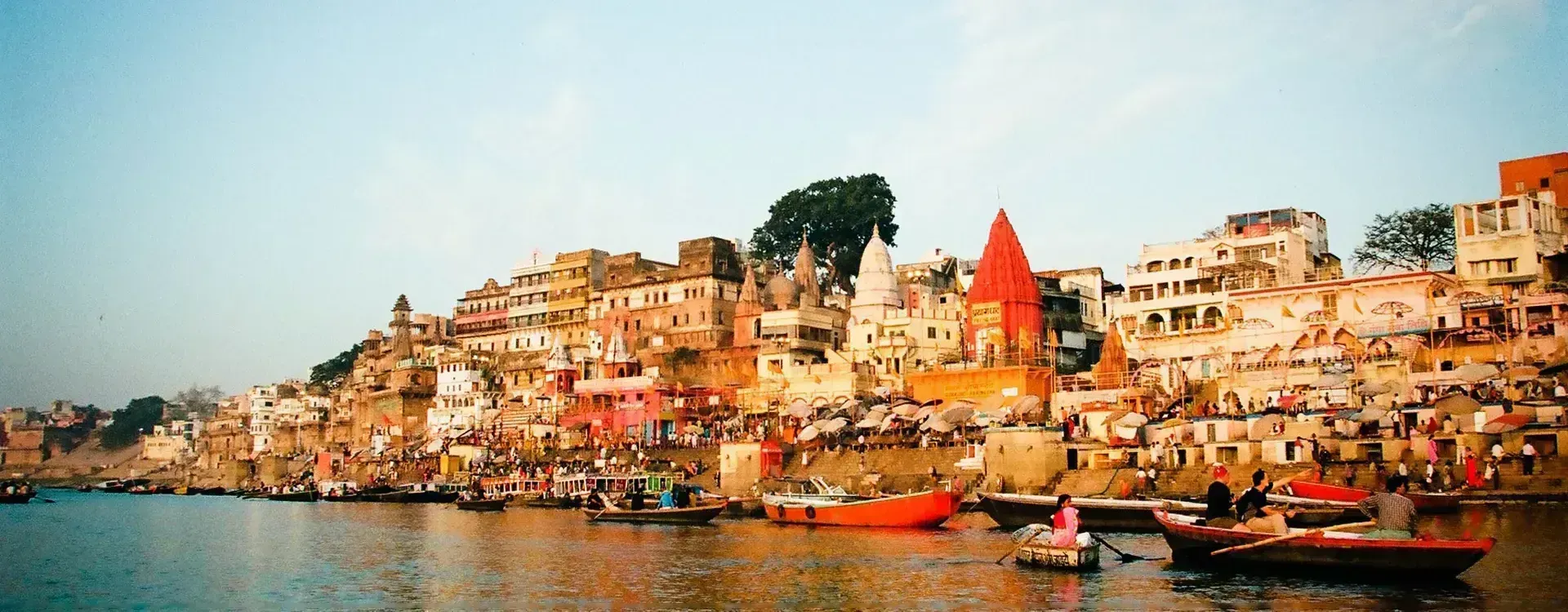
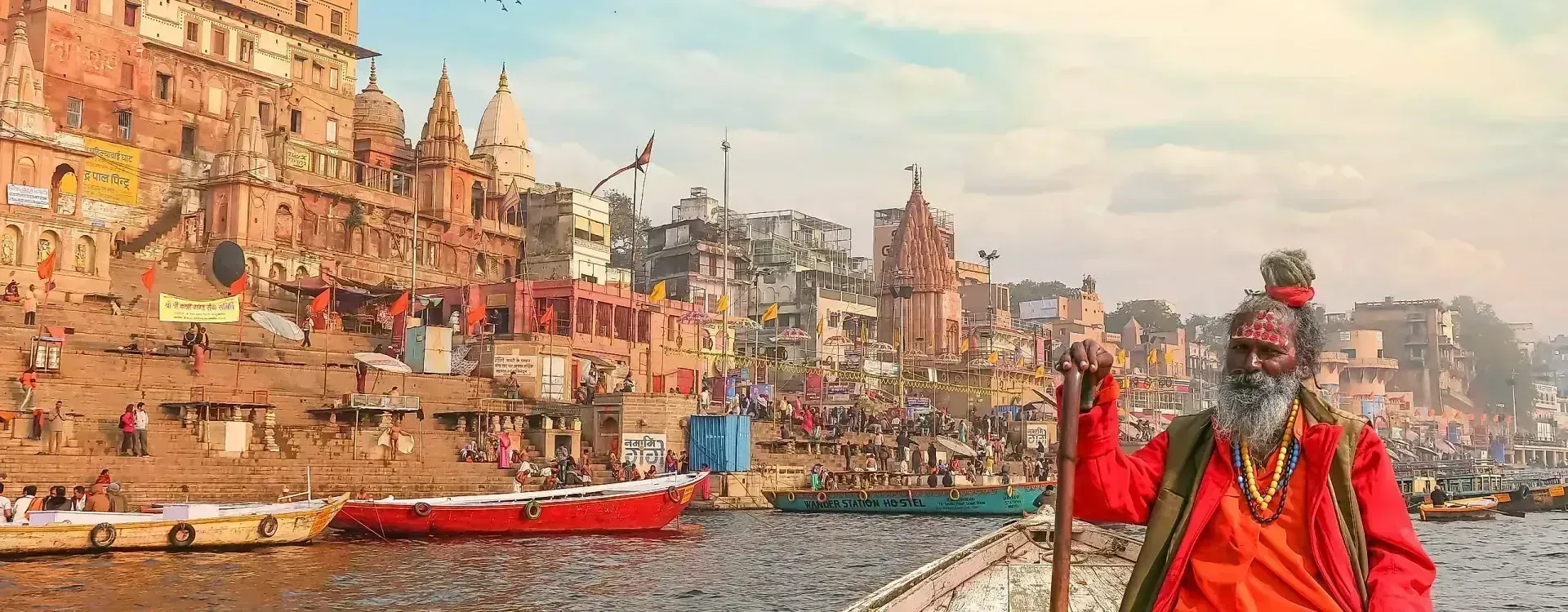
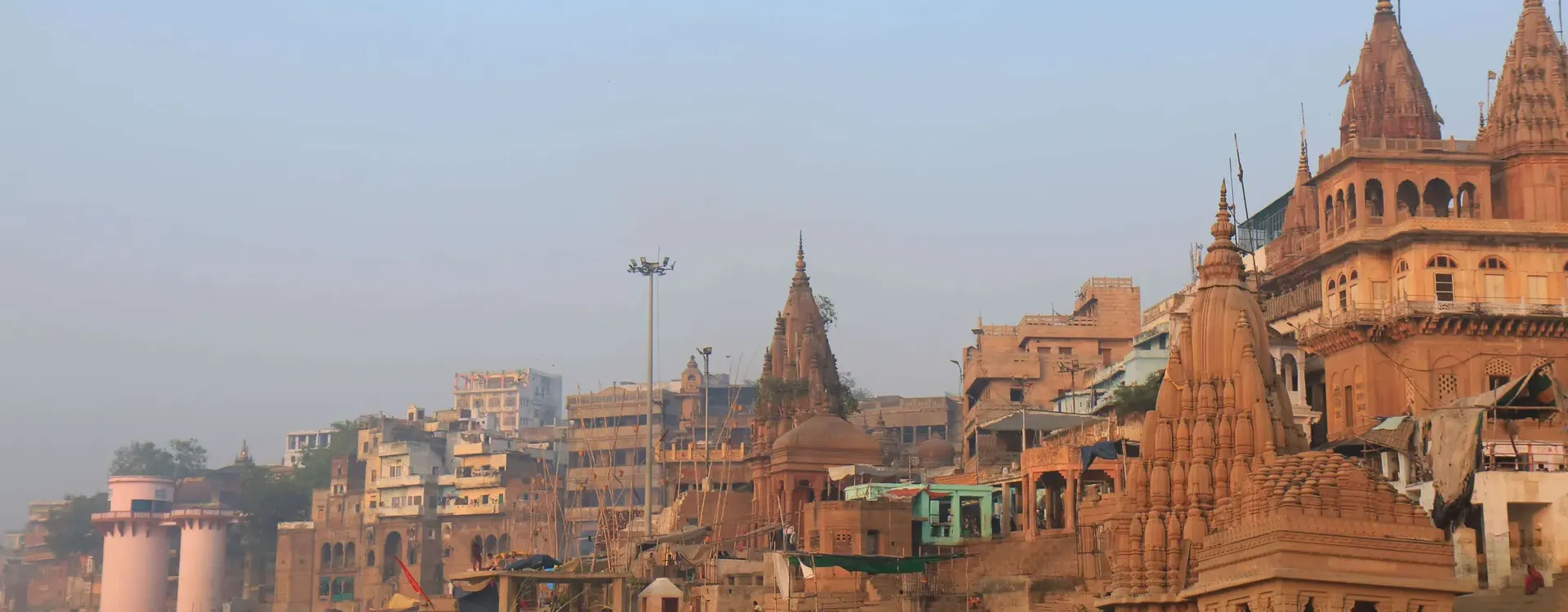
The Ghats — Varanasi has 88 ghats today (traditionally counted as 84), forming a crescent along the Ganga from Assi Ghat in the south to Raj Ghat in the north. A sunrise boat ride along them, watching the city wake up, pilgrims bathing, and the light turning gold over the water, is genuinely one of the most memorable experiences India has to offer. Manikarnika Ghat, one of the main cremation sites, is best observed respectfully from a distance rather than up close — it's a working, sacred site, not a photo opportunity.
Kashi Vishwanath Temple — Dedicated to Lord Shiva and one of the twelve Jyotirlingas, this is considered among the most sacred sites in all of Hinduism. The temple holds five aartis daily, starting with the Mangala Aarti at 3:00 AM (which requires advance booking) for those wanting the most sacred darshan. The recently built Kashi Vishwanath Corridor now connects the ghats directly to the temple with a wide pedestrian approach, making the walk from the river considerably easier than it used to be.
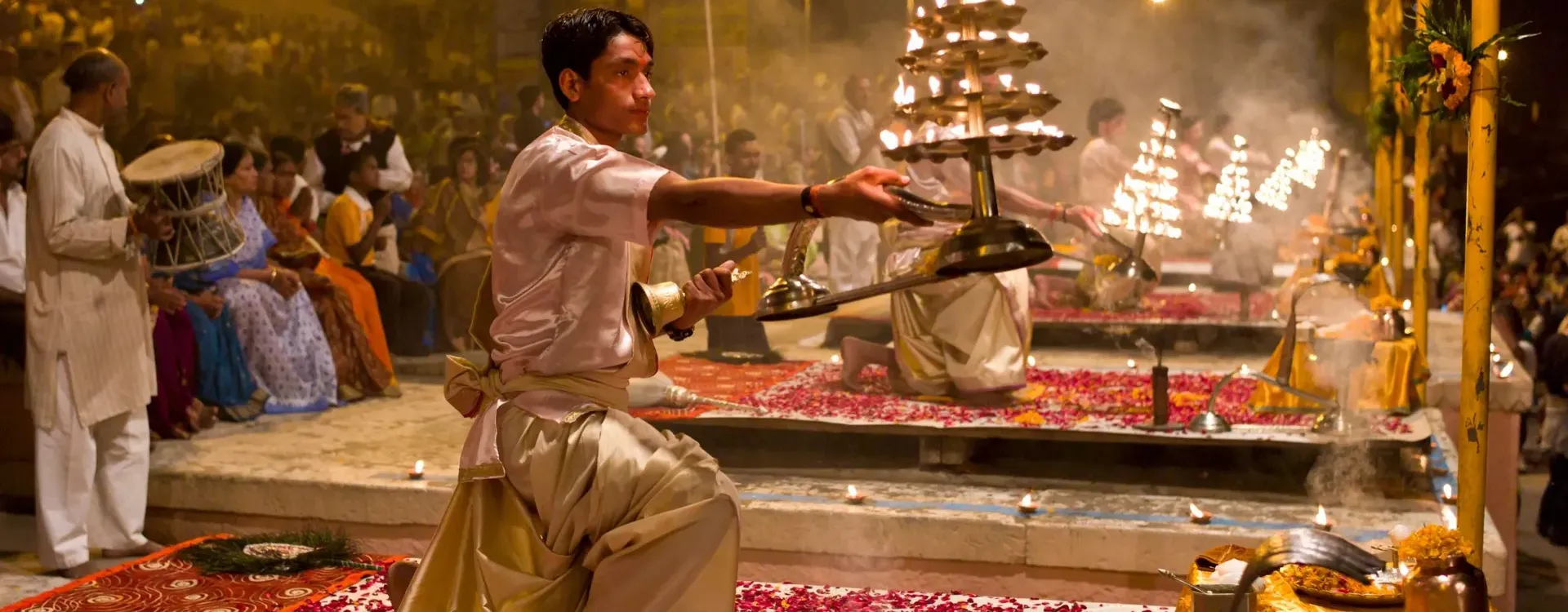
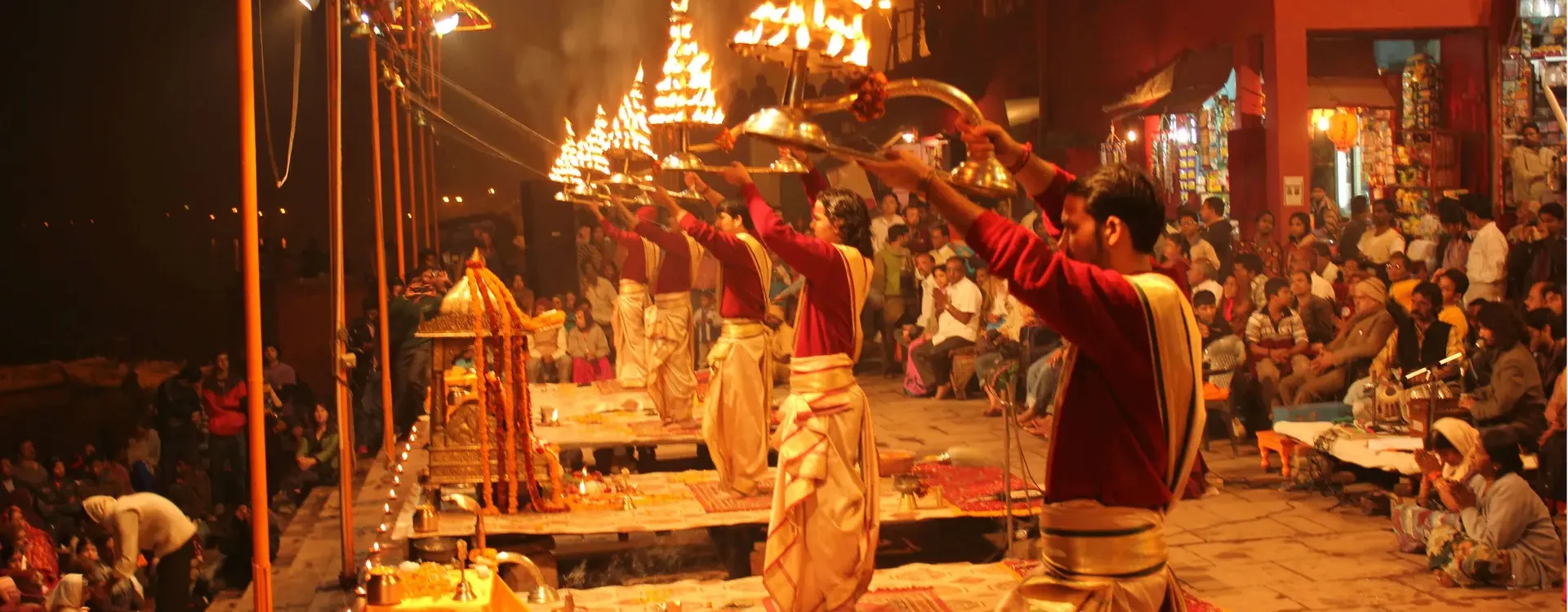
Dashashwamedh Ghat Ganga Aarti — The evening ritual that most visitors build their entire trip around: seven priests performing a synchronised, roughly 45-minute ceremony with fire, conch shells, bells, and chanting, honouring the river as the evening sets in. It's genuinely spectacular, and it happens every single evening, rain or shine.
Assi Ghat — The southernmost major ghat, known for its own morning aarti (the only one performed before sunrise, paired with yoga and meditation) and a slightly calmer, more contemplative energy than the crowds at Dashashwamedh.
Sarnath — About 13 km outside the city, this is where the Buddha delivered his first sermon after attaining enlightenment. The Dhamek Stupa here marks the spot, and it's a genuinely peaceful counterpoint to the intensity of the ghats.
Kaal Bhairav Temple — Local tradition holds that a visit here, considered the guardian deity of Kashi, should come before Kashi Vishwanath — many pilgrims treat this as the proper first stop of a Varanasi visit.
Timings and Entry Fees (worth double-checking before you go)
Site Timings Entry Fee Kashi Vishwanath Temple Opens 2:30 AM; five daily aartis, Mangala Aarti at 3:00 AM (booking required) Free general darshan; special Mangala Aarti tickets around ₹1,800 Dashashwamedh Ghat Ganga Aarti Just after sunset, roughly 6:00 PM (winter) to 7:00 PM (summer) Free from the steps; boat viewing costs extra Assi Ghat morning aarti Before sunrise Free Sarnath (Dhamek Stupa + museum) Daytime hours Around ₹20 combo ticket Sunrise boat ride Roughly 5:30–7:30 AM ₹800–2,000 for a private boat, depending on size and season
A heads-up: book boats through your hotel or a fixed-price government booth rather than touts near the ghats, who're known to quote inflated rates. Arrive at least 45–60 minutes early for the evening Ganga Aarti if you want a clear view from the steps.
Getting Around
The old city around the ghats is a genuine maze of narrow lanes — best explored entirely on foot, and honestly, getting a little lost here is part of the experience. Autos and cycle-rickshaws cover longer distances within the city, while Sarnath and the airport (about 25 km away) require a proper taxi ride. Comfortable walking shoes matter here more than almost anywhere else in India, since large parts of the ghats and old-city lanes simply aren't accessible any other way.
What to Eat
Varanasi's food culture is as much a part of the city's identity as its temples. Kachori Sabzi for breakfast, especially from long-running spots like Ram Bhandar, is a local institution. Tamatar Chaat (a tangy tomato-based street snack unique to the city) and Banarasi Lassi, thick and often topped with malai, are both worth seeking out — Blue Lassi and Kashi Chat Bhandar are well-known names locals and visitors both return to. In winter, don't miss Malaiyyo, a delicate, foamy milk-based dessert that only appears seasonally. And no visit is complete without trying Banarasi Paan — the city is famous for it, and it's as much a ritual as it is a snack.
Shopping
Varanasi is world-famous for Banarasi silk sarees, woven with gold and silver brocade work considered among the finest in India — the Chowk and Vishwanath Gali areas are packed with silk shops, though it's worth buying from fixed-price government emporiums or well-established shops to avoid inflated tourist pricing. Beyond silk, look for wooden toys, soapstone deity statues, and thandai mix, a spiced milk drink base that makes for an easy, packable souvenir.
What to Wear
Modest clothing is expected throughout the old city and especially at the temples and ghats — shoulders and legs covered goes a long way here. Be prepared to walk barefoot at several ghats and inside temples, so shoes that are easy to slip on and off are genuinely useful.
The Feel of the Place
Varanasi doesn't perform spirituality for visitors — it simply lives it, openly, all the time, and that's exactly what makes the city so disarming. Cremation rituals happen in full public view a short walk from where pilgrims bathe and children play cricket; ancient temple rites unfold a few lanes from silk shops and chai stalls. Locals will tell you Varanasi moves at its own pace and asks you to be patient with it, and that's genuinely true — this isn't a city that rewards rushing. Sitting quietly at a ghat for even twenty minutes, just watching the river and the life around it, tends to leave a stronger impression than any single monument.
Festivals Worth Timing Your Trip Around
Dev Deepawali (15 days after Diwali, usually November): The single most spectacular night to be on the river — every ghat lit with lakhs of earthen lamps. Book boats well in advance if you want to be on the water for this.
Mahashivratri (February/March): Turns Kashi Vishwanath into the spiritual centre of the entire city, with devotees pouring in from across India — expect significantly longer darshan queues, but an unmatched atmosphere.
A Tip From Experience
Do the sunrise boat ride even if you're not a morning person — it's genuinely the best way to see the ghats, before the crowds build and while the light is at its softest. And if you're aiming for the evening Ganga Aarti at Dashashwamedh, decide in advance whether you want the ghat-steps view or a boat view — both are good, but they're different experiences, and trying to decide on the spot in that crowd wastes precious time.
A Simple Two-Day Plan
Day one: Sunrise boat ride along the ghats, followed by Kaal Bhairav Temple and then Kashi Vishwanath Temple in the late morning. Spend the afternoon wandering the old city lanes and Chowk market, and close the day with the evening Ganga Aarti at Dashashwamedh Ghat. Day two: A half-day trip to Sarnath in the morning, followed by an afternoon exploring Assi Ghat and the BHU (Banaras Hindu University) area, with time set aside simply to sit at a quieter ghat before your final evening in the city.
Best Time to Go
October to March is the ideal window, with cool evenings that make the Ganga Aarti and ghat-side sitting genuinely comfortable, plus this period holds the largest crowds and the most atmosphere. Summers get hot and humid, which makes the extensive walking through the old city considerably more tiring, though the aarti and temple visits continue year-round regardless of season.
How to Get There
Varanasi has its own airport, Lal Bahadur Shastri International Airport, about 25 km from the city, with good domestic connectivity and a growing number of international routes. Varanasi Junction (also called Varanasi Cantt) is a major railway station, well connected to Delhi, Kolkata, Mumbai, and most of India. By road, Varanasi connects to nearby pilgrimage and heritage cities like Ayodhya (around 210–220 km) and Prayagraj, making it easy to combine with a wider Uttar Pradesh circuit if you have the time..
Frequently Asked Questions
Simple answers about booking, payments, trip plans and help during your holiday.
Still have questions about your trip?
Talk to our destination specialist for personalized itinerary guidance & custom quotes.